
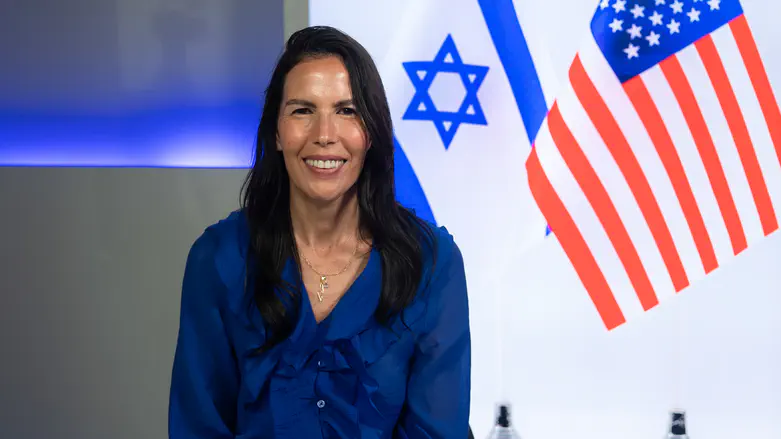

Inbal Ratz Gilmore dice que el ataque de Emanuel a la política israelí ignora la crisis más profunda que sacude a Estados Unidos. Sostiene que muchos judíos estadounidenses están reconsiderando viejas suposiciones y buscando una conexión más fuerte con Israel.
<!–>
Columnist and researcher Inbal Ratz Gilmore says Israel should avoid viewing former U.S. ambassador Rahm Emanuel’s criticism as representative of all American Jews, arguing instead that many Jewish communities in the United States are undergoing a profound reassessment of their relationship with Israel following the October 7th massacre.
Speaking in an interview with Arutz Sheva-Israel National News, Gilmore criticized Emanuel’s recent lecture at Tel Aviv University, where he attributed the growing rift between Israel and liberal America largely to Israeli policies. She argued that Emanuel ignored broader challenges facing the Democratic Party and was addressing a domestic American political audience rather than Israelis.
According to Gilmore, Emanuel’s remarks failed to acknowledge key realities exposed by October 7, including continued Palestinian support for Hamas’ atrocities and the organization’s declared goal of destroying Israel. She said focusing solely on Israeli responsibility overlooks the wider regional context and the security threats Israelis face.
Despite the sharp criticism from some prominent American Jewish figures, Gilmore said she does not believe Emanuel reflects the views of American Jewry as a whole. She said many liberal rabbis and Jewish leaders are seeking a deeper understanding of Israel after witnessing a surge in antisemitism following October 7.
“The answers they were given before October 7 are no longer enough,” she said, arguing that many American Jews have realized hostility toward Jews extends beyond opposition to Israeli government policies.
Gilmore also said Israel bears part of the responsibility for the disconnect, arguing that successive governments failed to adequately explain Israel’s security realities to Jewish communities abroad. At the same time, she said many liberal Jewish organizations primarily heard perspectives from Israel’s political left, while conservative voices did little to engage directly with American Jews.
“I think the two sides, especially after October 7, should do more,” she said. “We’re not going to agree on everything, but we’re part of the same people.”
Turning to American politics, Gilmore said the rise of New York politician Zohran Mamdani should be viewed as the result of longer-term ideological trends rather than a starting point. She argued that decades of influence from progressive activism, Marxist ideas, and Islamist movements on university campuses contributed to the current climate.
She also warned that anti-Israel sentiment is not confined to the political left. Gilmore pointed to isolationist voices within the MAGA movement, including commentator Tucker Carlson, saying that extremists on both the left and right increasingly use similar rhetoric against Israel.
“It’s not about Israel,” she said. “It’s an internal problem within America.”
Despite growing polarization, Gilmore expressed optimism that the relationship between Israel and American Jewry can be strengthened through greater dialogue and mutual understanding. She also highlighted bipartisan supporters of Israel, including Democratic lawmakers John Fetterman and Ritchie Torres, as evidence that strong pro-Israel voices remain influential in American politics.
“Everything is changing,” she said. “But it’s not lost. There are many voices in America working to restore what has been lost, and it’s in Israel’s interest that they succeed.”
–>
Fuente original: Leer nota completa